[Otorhinolaryngology Laryngoscopy] What are the voice diseases under laryngeal endoscopy?
Release time: 19 Aug 2025 Author:Shrek
Voice disorders refer to abnormalities in the structure and shape of human vocal organs, vocal functions, and the sounds produced due to organic, functional, neurogenic, or psychological diseases. Voice disorders are divided into three categories according to their causes: functional voice disorders, organic voice disorders and neurological voice disorders.
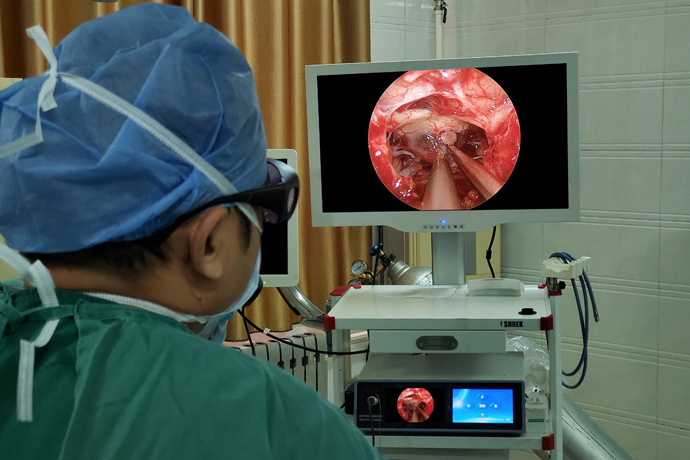
When your voice continues to be hoarse, hoarse or even lost, the doctor discovers through a laryngoscope that there is "physical damage" to your vocal cords or throat structure - this is an organic voice disorder. To put it simply: there is something wrong with the "hardware" of the vocal organ.
Voice diseases refer to diseases that cause abnormalities in volume, pitch, tone quality, pronunciation, etc. Common diseases include laryngitis, vocal cord nodules, vocal cord polyps, etc. Details are as follows:
1. Laryngitis
Laryngitis is an inflammation of the larynx caused by factors such as excessive vocalization, long-term inhalation of dust irritation, or microbial infection. It is mainly characterized by rough, low, and hoarse voices. In severe cases, it can lead to voice loss.
2. Vocal cord summary
Vocal cord nodules are mainly related to improper or excessive use of voice, and can manifest as symptoms such as abnormal pitch, lack of pitch change, weak articulation, and hoarseness.
3. Vocal cord polyps
Vocal cord polyps are benign proliferative lesions that occur on the human vocal cords. They are mostly related to improper or excessive phonation. They are mainly characterized by hoarseness, changes in vocal range, and pronunciation fatigue. They can become progressively worse as the disease develops.
In addition to the above common diseases, voice diseases also include laryngeal papilloma, laryngeal vocal cord cancer, hypopharyngeal cancer and other diseases. If abnormal voice occurs, it is recommended that the patient seek medical examination in time to determine the specific cause and then provide targeted treatment.
Functional voice disorders
1. Muscle tension dysphonia
Myotonic dysphonia is a dysphonia caused by excessive tension of the internal or external laryngeal muscles during phonation. It is often ignored in China. It is more common in voice workers such as teachers, businessmen, and telephone operators. They have a long history of improper use of the voice, excessive use of the voice, smoking and alcohol abuse. The treatment is mainly based on voice training, with good results.
2. Ventricular dysphonia
Ventricular zone dysphonia is a false vocal cord called ventricular zone pronunciation caused by long-term loud speaking and improper use of the voice. Ventricular zone hypertrophy can be seen on the laryngoscope, which can manifest as laborious speech, fatigue, hoarseness, etc. The main treatment method is voice training.
3. Arched vocal cords
The causes of arched vocal cords include superior laryngeal nerve paralysis, chronic inflammation, atrophic laryngitis, etc. The vocal cords are arched, resulting in poor closure of the glottis, resulting in hoarseness and other symptoms. The main treatment is vocal cord injection and filling. Our department has accumulated many years of experience in vocal cord microsurgery and vocal cord suturing technology, and the surgical results are good.
organic voice disease
1. Acute laryngitis
Acute laryngitis is usually accompanied by acute infection of the respiratory tract or caused by direct irritation from inhaled chemical substances. Symptoms include sudden onset of hoarseness or even loss of voice, accompanied by sore throat or fever. Treatment is mainly based on sound therapy and drug therapy.
2. Chronic laryngitis
Chronic laryngitis is common among voice workers, smokers and alcoholics, repeated episodes of acute laryngitis that are not cured, or long-term respiratory inflammation. The main symptoms are hoarseness, accompanied by dryness and discomfort in the throat and sticky phlegm. Treatment mainly focuses on voice training and medication.
3. Vocal cord summary
Vocal cord nodules, also known as singer's nodules and teacher's nodules, are more common in voice workers. They are mainly characterized by repeated episodes of hoarseness, or accompanied by pronunciation fatigue, difficulty in speaking, etc. The hoarseness is aggravated by long-term speaking, and can be alleviated after voice cessation. Vocal cord nodules appear as small gray-white bumps and are generally symmetrical. Smaller or early-stage vocal cord nodules can be treated through pronunciation training. For larger vocal cord nodules, surgical removal may be considered if the voice training effect is not good.
4. Vocal cord polyps
Vocal cord polyps are more common in voice workers and manifest as recurring hoarseness. Polyps can appear unilateral or bilateral, pedunculated or broad-based, and can be gray-white, light red, bright red, purple-red, etc. Some vocal cord polyps can be improved through conservative treatment and voice training. If these treatments are ineffective, surgery can be performed. Some vocal cord polyps can be treated directly with surgery, and voice training can be combined to prevent recurrence after surgery.
5. Leukoplakia on vocal cords
Leukoplakia on the vocal cords is a precancerous lesion caused by long-term smoking and improper use of the voice. The main symptoms are hoarseness, easy recurrence and canceration. The main treatment is surgery, and drugs (such as mitomycin) are used together with the surgery to prevent recurrence.
6. Vocal cord groove
The vocal fold groove is a longitudinal groove-like depression parallel to the edge of the vocal fold. It is located in the center of the upper and lower edges of the vocal fold and extends to the entire or part of the vocal fold membrane. It often causes various degrees of difficulty in articulation. Treatment options include: voice training, vocal cord injections, and thyrochondroplasty.
7. Laryngeal papilloma
Laryngeal papilloma is caused by viral infection and has a slow course. The main symptom is hoarseness. When the tumor grows, it can block the glottis and cause difficulty in breathing. The main treatment is surgery, which is prone to recurrence. Our department currently carries out a treatment plan of microsurgical resection under laryngoscope and local injection of interferon, and the recurrence rate has been significantly reduced.
8. Contact granuloma
The causes of contact granuloma include gastroesophageal reflux, laryngopharyngeal reflux, endotracheal intubation, etc. It can manifest as hoarseness ranging in severity. Treatment methods include anti-reflux therapy and surgery, but the recurrence rate is high. Our department currently uses high-frequency jet oxygen anesthesia, and primary suturing of the mucosa after granuloma removal has achieved satisfactory results and significantly reduced the recurrence rate.
9. Malignant tumors
90% of laryngeal malignant tumors are squamous cell carcinomas, which are more common in men. They usually have a habit of smoking and drinking for many years. Common symptoms include hoarseness, dyspnea, dysphagia, cervical lymph node enlargement, etc. The treatment is mainly a comprehensive treatment of surgery combined with radiotherapy and chemotherapy, and the overall treatment effect is good.
neurological voice disorders
1. Vocal cord paralysis
Vocal cord paralysis can manifest as unilateral or bilateral vocal cord paralysis. The main causes include central, tumor (including skull base, larynx, thyroid, thoracic tumors, etc.), surgical trauma, trauma, infection, and unknown causes. The main symptoms of unilateral vocal cord paralysis are hoarseness and difficulty speaking, while bilateral vocal cord paralysis can manifest as hoarseness and difficulty breathing, which needs to be taken seriously. Unilateral vocal cord paralysis can be treated with voice training, vocal cord injection, etc. Bilateral vocal cord paralysis can be treated with tracheotomy, vocal cord external fixation, etc. depending on the specific situation.
2. Spasmodic dysphonia
Spasmodic dysphonia is a neuromuscular disease caused by a disorder in central motor information processing. It is characterized by involuntary movement of one or more muscles in the larynx during pronunciation, causing spasmodic pronunciation. It has no effect on singing, laughing, coughing, or other functions of the larynx. The incidence rate is about one in 100,000, and it is most common in people aged 30 to 50 years old. It is more common in women. It is mainly characterized by pronunciation tremor and frequent voice interruptions. The otolaryngology industry has confirmed that botulinum toxin injection is a safe and effective treatment for spasmodic dysphonia.
Psychiatric voice disorders, neurotic voice disorders
1. Articulation disorder in adolescence
The childish voice will gradually disappear during adolescence. Girls' voices change between the ages of 13 and 15, and their voices are high and shrill. Boys' voices change between the ages of 14 and 16, and their voices are thick and deep. Treatment options include psychotherapy, voice training, and thyrochondroplasty.
2. Transformational dysphonia
Due to sudden and huge changes in life and work, including job changes, car accidents, death of loved ones and other major psychological traumas, dysphonia can be caused. The main treatment is psychotherapy, which can assist with voice training.
- Recommended news
- 【General Surgery Laparoscopy】Cholecystectomy
- Surgery Steps of Hysteroscopy for Intrauterine Adhesion
- [Orthopedic UBE Section] Four Years of Evolution of UBE Technology: From Lumbar Fusion to the "Forbidden Zone" of Thoracic and Cervical Spine, and the Unignorable "Hydraulic Pressure Crisis"
- [Gynecological Hysteroscopy] Techniques for Preventing and Treating Complications of Hysteroscopic Surgery
- [Laryngoscopy in Otolaryngology] Tonsillectomy