[Urology Cystoscopy Section] Cystoscopic Laser Lithotripsy
Release time: 26 Feb 2026 Author:Shrek
Q: Will bladder stones always cause symptoms?
A: In the early stages, there may be no obvious symptoms. As the stone grows, symptoms such as frequent urination, urgency, painful urination, and hematuria will gradually appear.
Q: Who is more prone to bladder stones?
A: People with benign prostatic hyperplasia (BPH), chronic urinary retention, urinary tract infections, or highly concentrated urine are particularly susceptible.
Q: How can bladder stones be prevented?
A: Controlling BPH, improving urinary flow, drinking enough water, and having regular checkups are key.
How to diagnose bladder stones?
A preliminary diagnosis can be made based on typical symptoms. Ultrasound can show the acoustic shadowing of the stone. Cystoscopy allows direct visualization of the stone and sometimes reveals the cause. X-ray and CT scans can clearly show bladder stones.
What are the treatment methods for bladder stones?
Cystoscopic ultrasonic pneumatic lithotripsy or laser lithotripsy can treat most bladder stones; for a few stones that are too large or too hard (which can be determined by preoperative CT scan), suprapubic cystotomy may be performed.
1. Surgical procedure:
1. After epidural anesthesia, the patient is placed in the lithotomy position. Routine disinfection and draping are performed, and an appropriate amount of sterile paraffin oil is injected through the external urethral orifice.
2. The cystoscope is slowly inserted into the bladder through the urethra. During insertion, the urethral mucosa is observed for damage or stricture.
3. After entering the bladder, a stone is visible, approximately [X] cm × [X] cm in size, brownish in color, and with a rough surface.
4. Connect the holmium laser fiber optic cable and guide it to the stone site through the cystoscope's operating channel. Activate the holmium laser to break the stone into smaller pieces.
5. Larger stone fragments are removed using stone forceps through the cystoscope. Smaller fragments are flushed out of the bladder with the irrigation fluid through the cystoscope sheath.
6. Repeatedly irrigate the bladder until the irrigation fluid is clear and no stone remains.
7. Examine the bladder mucosa; if no obvious damage is found, withdraw the cystoscope.
8. Insert an F20 three-lumen balloon catheter for continuous bladder irrigation.
2. Advantages:
1. Precise and efficient. The holmium laser pulse target, energy, and action time are precisely located and quantified by computer, achieving a one-time solution in a short time. Precise control throughout the procedure, with direct visual imaging for the physician, ensures safety and efficiency.
2. Minimal trauma and safety. Holmium lasers only target the stones and do not produce a thermal effect on surrounding tissues. Therefore, during the stone fragmentation process, there is no damage to surrounding tissues, and there is no risk of perforation, bleeding, or complications associated with traditional surgery.
3. Fast speed and short treatment time. This laser has a strong water absorption capacity, concentrating laser energy on the surface, resulting in excellent cutting and tissue removal capabilities. This produces finer, powdery stone fragments, significantly shortening the time for stone passage after fragmentation.
4. Fewer complications and lower cost. Patients who successfully undergo holmium laser treatment for urinary stones experience no sequelae and few complications, completely avoiding the drawbacks of traditional surgery, such as numerous complications and secondary damage to body tissues. This greatly shortens treatment time and correspondingly reduces costs.
Endoscopic surgery for bladder stones via the urethra is currently the primary treatment for bladder stones, and it can simultaneously address underlying conditions such as lower urinary tract obstruction, benign prostatic hyperplasia (BPH), and urethral stricture.
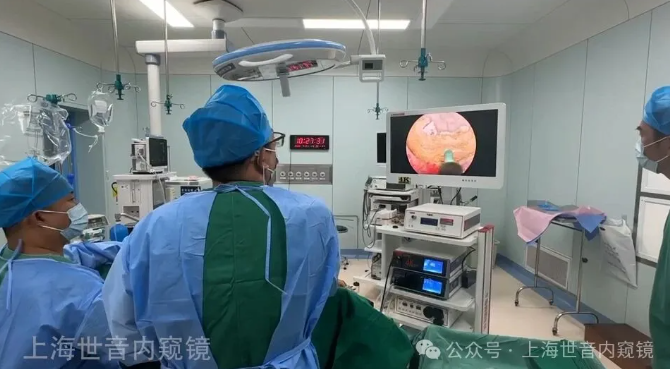
Transurethral laser lithotripsy
is currently the preferred treatment for bladder stones. Holmium laser lithotripsy is commonly used. For larger stones, the holmium laser can first break them up, and then the fragments can be removed from the body using an EMS (Electro-Mechanical System) for stone removal. Holmium laser lithotripsy can also simultaneously treat other underlying conditions that cause stones, such as BPH and urethral stricture.
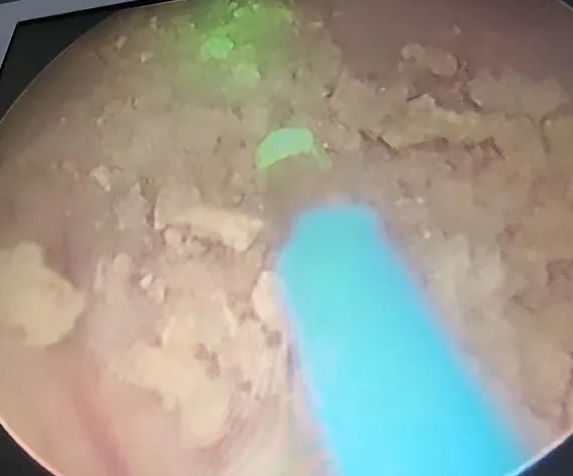
What are the post-operative health guidelines for discharge?
Adjust your diet according to the composition of the stones, maintaining a daily urine output of over 3000mL. Distribute your daily fluid intake evenly throughout the day, giving it to your mouth upon waking, between meals, and before bed. Drink 200-300mL of water in the morning. To maintain nighttime urine output, drink 500mL of water before bed, and drink about 300mL after urinating during the night. Drink the remaining water between meals. Taking traditional Chinese medicine after surgery can reduce the recurrence rate of stones. Pay attention to balancing work and rest, engage in appropriate physical activity, avoid strenuous exercise, and have regular follow-up examinations.
Next
没有了!
- Recommended news
- 【General Surgery Laparoscopy】Cholecystectomy
- Surgery Steps of Hysteroscopy for Intrauterine Adhesion
- [Urology Cystoscopy Section] Cystoscopic Laser Lithotripsy
- [Laryngoscopy in Otolaryngology] Tonsillectomy
- [Otolaryngology Otoscopic Section] Excision of Cholesteatoma in the External Auditory Canal