[Orthopedic Arthroscopy] Methods and techniques for treating tibial intercondylar ridge fractures
Release time: 22 Jul 2025 Author:Shrek
What is a tibial intercondylar ridge fracture?
The intercondylar ridge is a bony bump between the articular surfaces of the medial and lateral condyles of the tibia. The anterior and posterior positions of the bump are the attachment points of the meniscus and anterior cruciate ligament respectively. Therefore, when the intercondylar ridge fractures, it will seriously affect the function and even stability of the knee joint. Research on tibial intercondylar crest fractures can be traced back to 1875. It was first thought that this fracture occurred in children and adolescents and was similar to adult anterior cruciate ligament injury (ACL injury). Since then, researchers have successively reported adult intercondylar crest avulsion fractures and intercondylar crest fractures combined with other injuries, such as tibial plateau fractures combined with intercondylar crest fractures, etc., and have proposed different treatment methods.Broadly defined intercondylar ridge fractures include simple and compound intercondylar ridge fractures. Intercondylar ridge fracture in the narrow sense refers to simple intercondylar ridge fracture, also known as isolated intercondylar ridge fracture, primary intercondylar ridge fracture or intercondylar ridge fracture type A, without tibial plateau fracture. Simple intercondylar ridge fractures are relatively rare. Compound intercondylar ridge fracture refers to an intercondylar ridge fracture combined with tibial plateau fracture, also known as complex intercondylar ridge fracture, secondary intercondylar ridge fracture or intercondylar ridge fracture type B, which is relatively common.
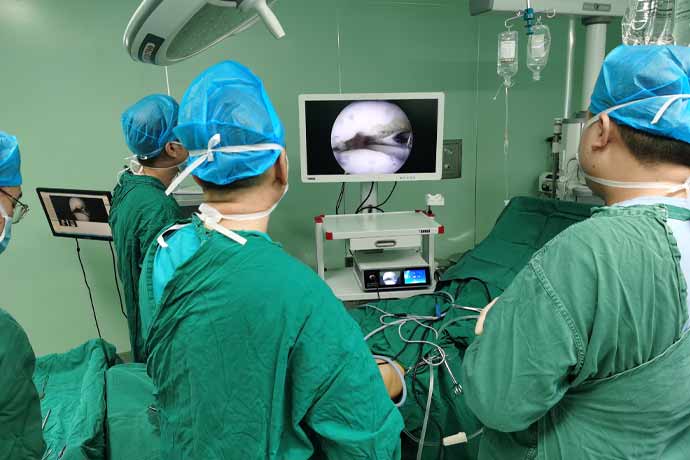
Fractures of the tibial intercondylar spine account for approximately 0.38% of all fractures in the body. It occurs more commonly in young adults, with more male patients than females. Intercondylar spine fractures are intra-articular fractures, most of which are avulsion fractures of the cruciate ligament insertion point, which can easily cause knee joint dysfunction. Therefore, orthopedic surgeons should pay more attention to it.
Traditional surgical methods for tibial intercondylar spine fractures can generally include the following types:
First: After cutting, fix it with steel wire or screws. This type of method requires incision of the joint capsule, which causes large surgical trauma and can easily cause joint adhesions. When the bone fragment is small or very thin, it is difficult to fix and may easily cause the fracture fragment to re-fracture.
Second: High-strength "8" figure wrapping and fixation under arthroscopy. This type of surgery is less invasive and does not require a second surgery to remove the internal fixation. However, it requires extensive experience in arthroscopic surgery, has a long learning cycle, long operation time, and cumbersome steps. When the surgical experience is not rich or the bone fragment is small, slippage of the thread may easily occur, leading to internal fixation failure.
Third: ACL reconstruction surgery. It costs the patient a lot of money, causes great pain, and takes a long time to recover. It takes 6-9 months after the operation to return to normal life, which seriously affects the patient's life and work.
Arthroscopic Technology: A Revolution in Minimally Invasive Treatment
Precise reduction and anatomical repair
The high-definition field of view of arthroscopy can explore the intra-articular structure 360° without blind spots, accurately assess the degree of fracture displacement and ligament damage, ensure anatomical reduction of fractures, and restore the biomechanical stability of the knee joint.
Minimal trauma and rapid recovery
The surgery is completed through only 2-3 5mm tiny incisions, avoiding the extensive dissection of traditional surgery. Postoperative pain is mild, bleeding is less, and joint function recovers faster.
Personalized internal fixation plan
Fixation technologies such as absorbable screws, anchors, or looped titanium plates are selected according to the fracture type. The materials are highly biocompatible and do not require secondary removal. They are especially suitable for teenagers and people with high sports needs.
Few complications and excellent long-term effects
Early movement reduces the risk of joint adhesion, and combined with postoperative systematic rehabilitation training, can effectively reduce the incidence of traumatic arthritis and help patients return to sports and daily life.
Arthroscopic Kirschner wire fixation of tibial intercondylar spine fracture is simple, effective, and cost-effective. It is a good way to treat tibial intercondylar spine fractures.
Kirschner wire bending method:
Step 1: Prepare a 1.5 Kirschner wire and needle holder.
Step 2: Hold the Kirschner wire with the needle holder, just 5mm away from the tip.
Step 3: Bend 90°.
Step 4: Move the needle holder 5-10mm distally.
Step 5: Bend the same plane 90° again.
- Recommended news
- 【General Surgery Laparoscopy】Cholecystectomy
- Surgery Steps of Hysteroscopy for Intrauterine Adhesion
- [Urology Cystoscopy Section] Cystoscopic Laser Lithotripsy
- [Laryngoscopy in Otolaryngology] Tonsillectomy
- [Otolaryngology Otoscopic Section] Excision of Cholesteatoma in the External Auditory Canal