[Ureteroscopy in Urology] Laser lithotripsy for ureteral stones
Release time: 17 Jul 2026 Author:Shrek
When a sudden, severe pain occurs in one side of the lower back, as if being stabbed with a knife and unbearable, accompanied by nausea, vomiting, and even hematuria...
Beware! This could very well be caused by ureteral stones!
Laser lithotripsy for ureteral stones is one of the most effective minimally invasive methods for treating ureteral stones. It is a mature, safe, and efficient technique.
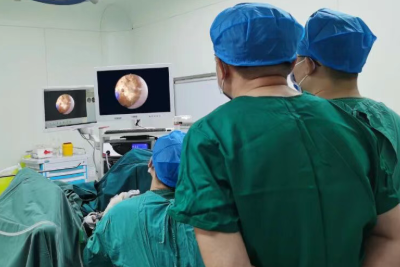
How is laser lithotripsy for ureteral stones performed?
In simple terms, laser lithotripsy for ureteral stones involves inserting a thin ureteroscope through the body's natural cavity (urethra) to reach the location of the stone. Then, a high-energy laser is used to break the stone into small particles, allowing it to be naturally excreted with urine.
The lithotripsy process: 1. First, we need to locate the stone. The ureteroscope is inserted through the external urethral orifice and then into the bladder along the urethra.
2. Lithotripsy. Locate the ureteral orifice, then enter the ureter and move upwards until the stone is reached. The laser is extended from the mouth of the ureteroscope. With the stone and the laser visible, the laser is used to gradually break the stone into smaller pieces.
Placement of ureteral stent
To drain urine and prevent stone fragments from blocking the ureter, a ureteral stent needs to be placed after lithotripsy.
In summary, ureteroscopic lithotripsy generally involves the following steps: Ureteroscopy → inserted through the urethra → reaches the bladder → enters the ureter → locates the stone → laser lithotripsy → ureteral stent placement. Patients can usually move around independently 6 hours post-surgery, the catheter is removed 2-3 days later, and patients are discharged 2-4 days post-surgery.
This is like using a "laser sniper rifle" to precisely shatter the "stone" inside the body. The surgery typically employs minimally invasive techniques, performed through the body's natural cavities, and is academically termed: ureteroscopic laser lithotripsy.
Advantages of Ureteroscopic Lithotripsy: 01. No Incision: The ureteroscope enters the ureter and kidney through the urethra, using a holmium laser to break up stones. This method protects the kidneys and leaves no wounds on the patient's skin, resulting in more thorough stone fragmentation. Compared to extracorporeal shock wave lithotripsy (ESWL), ureteroscopic lithotripsy avoids repeated treatments, long waiting times for stone passage, and uncertainty in fragmentation results. It is suitable for a wider range of patients, especially those with severe cardiovascular disease requiring anticoagulant medication. 02. Fast Stone Passage and Quick Recovery: During the procedure, the laser breaks the stones into fine powder, making it both safe and time-saving. Furthermore, fragmentation and stone passage occur simultaneously, quickly eliminating the stones. Recovery is typically within 3-5 days post-surgery. 03. High Efficiency and Safety: The success rate of holmium laser lithotripsy under ureteroscopy (rigid or flexible) is over 95%, and the success rate for treating bladder stones can reach 100%. It is a highly efficient, safe, low-cost, time-saving method for treating urinary tract stones with extremely low side effects.
Will patients feel pain during the surgery? The surgery is generally performed under general anesthesia, with an anesthesiologist present, so there will be no pain. Furthermore, the surgery is nearly non-invasive, so the postoperative pain during recovery is minimal.
In what situations should laser lithotripsy be considered for ureteral stones?
● Severe lower abdominal pain (renal colic) that cannot be relieved by medication
● Large stones (usually >6mm) that are difficult to pass spontaneously
● Stones causing urinary tract obstruction, leading to hydronephrosis and impaired kidney function
● Stones causing recurrent urinary tract infections
● Failure of conservative treatment (medication to expel stones)
- Recommended news
- 【General Surgery Laparoscopy】Cholecystectomy
- Surgery Steps of Hysteroscopy for Intrauterine Adhesion
- [Orthopedic UBE Section] Advanced Guide to Unilateral Dual-Channel Endoscopy (UBE): 10 Key Details for Overcoming the Learning Curve
- [Orthopedic UBE Section] Four Years of Evolution of UBE Technology: From Lumbar Fusion to the "Forbidden Zone" of Thoracic and Cervical Spine, and the Unignorable "Hydraulic Pressure Crisis"
- [Gynecological Hysteroscopy] Techniques for Preventing and Treating Complications of Hysteroscopic Surgery