[Laparoscopic Urology] Laparoscopic Radical Right Nephrectomy
Release time: 24 Mar 2026 Author:Shrek
The incidence of kidney cancer in my country has been increasing at an alarming rate of 6.5% annually over the past 20 years, ranking second among urological tumors and becoming a leading cause of death from malignant tumors.

Our kidneys are composed of many nephrons, which do not work simultaneously. This "rotation system" protects the kidneys from overwork, but it also has negative effects. Many people are unaware of potential kidney problems until they are discovered in an advanced, incurable stage.
Therefore, if you discover any health problems in your daily life, you must go to the hospital for examination and treatment to protect your health.
Treatment Options
1. The most common treatment for kidney cancer is surgical removal.
Surgery is the primary treatment for kidney cancer that has not spread outside the kidney. Depending on the type, stage, and grade of the kidney cancer, as well as your general health condition, you may undergo one of the following procedures:
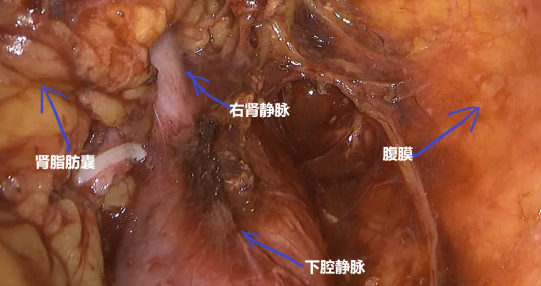
● Removal of the entire kidney (radical nephrectomy)
This is the most common surgery for large tumors. The entire affected kidney, a small portion of the ureter, and surrounding fatty tissue are removed. The adrenal gland and nearby lymph nodes may also be removed. Sometimes, kidney cancer may have spread to the renal vein and even to the vena cava, which is located primarily near the spine. Even if the cancer is present in the vena cava, sometimes all the cancer can be removed in a single surgery.
●Partial Kidney Removal (Partial Nephrectomy)
For tumors confined to the kidney, this is sometimes an option, and is particularly useful for people with a history of kidney disease, kidney cancer, or only one working kidney. Only the cancerous tissue and a small portion of the kidney are removed, meaning kidney function is preserved. Partial nephrectomy is more difficult to perform than radical nephrectomy, and whether this is possible depends on the location of the tumor.
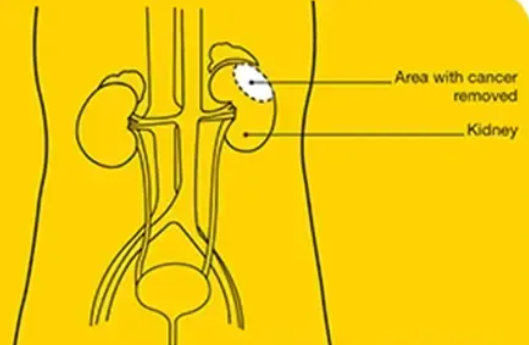
If the entire kidney or a portion of the kidney is removed, the remaining kidney usually performs the function of both kidneys.
● How the surgery is performed
If you are undergoing kidney cancer surgery, it will be performed in a hospital under general anesthesia.
Whether a total or partial nephrectomy is performed (radical or partial nephrectomy), different surgical methods can be used, each with its advantages in specific situations.
● Laparoscopic surgery
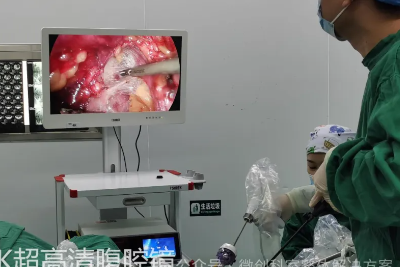
Laparoscopic surgery is sometimes called keyhole or minimally invasive surgery. The surgeon makes several small incisions and inserts a miniature instrument with light and a camera (laparoscopy) into one of the incisions. The laparoscope takes pictures of your body and displays them on a television screen. The surgeon then inserts tools into the other incisions and uses the images on the screen to guide the procedure.
Compared to open surgery, standard laparoscopic surgery and robot-assisted surgery generally mean shorter hospital stays, less pain, and faster recovery times. However, in some cases, open surgery may be a better option.
- Recommended news
- 【General Surgery Laparoscopy】Cholecystectomy
- Surgery Steps of Hysteroscopy for Intrauterine Adhesion
- [General Surgery Laparoscopy] 4K ultra-high definition laparoscopic deroofing and decompression of renal cysts
- [Ureteroscopy in Urology] Laser lithotripsy for ureteral stones
- [Laparoscopic Urology] Laparoscopic Radical Right Nephrectomy