[ENT Surgery: Nasal Endoscopy] Endoscopic Treatment of Nasal Polyps
Release time: 20 Jan 2026 Author:Shrek
Nasal polyps are growths formed by edematous nasal mucosa protruding into the nasal cavity. They commonly occur in the ethmoid sinus, maxillary sinus, free edge of the middle turbinate, uncinate process, ethmoid bulla, and crescentic cleft within the middle meatus. The incidence rate is 1%–4% of the total population, and they can occur singly or in multiples. Nasal polyps have a high recurrence rate, with a postoperative recurrence rate of 15%–40%. They are masses formed by extreme edema and thickening of the nasal cavity and sinus mucosa.
Clinical Manifestations
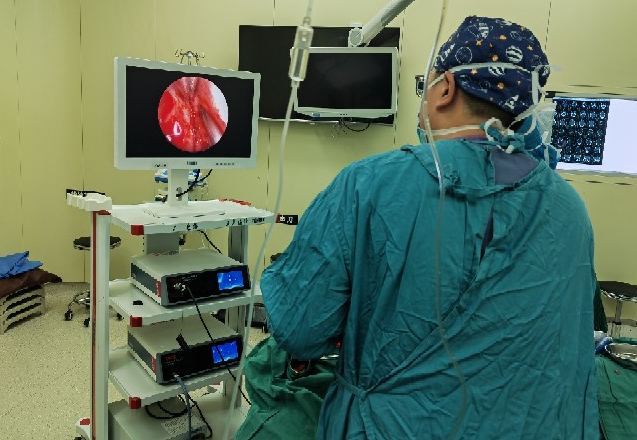
Progressive, persistent nasal congestion, unilateral or bilateral;
Decreased sense of smell;
Excessive nasal discharge;
Headache;
Obscured nasal voice, snoring during sleep;
"Frog nose" (a type of nose resembling a frog's nose);
Tinnitus, hearing loss;
Nasal polyps are more common bilaterally, less common unilaterally. The most common symptom is persistent nasal congestion, which worsens as the polyp grows. Increased nasal discharge, sometimes accompanied by sneezing, may be serous or mucous; if sinus infection is present, the discharge may be purulent. Olfactory dysfunction is common. Severe nasal congestion results in an obstructed nasal voice and snoring during sleep. In cases with long polyp stalks, a feeling of something moving in the nasal cavity with breathing may be felt. Posterior nasal polyps can cause difficulty exhaling through the nose; if the polyp obstructs the Eustachian tube opening, it can cause tinnitus and hearing loss. Polyps obstructing sinus drainage can cause sinusitis, leading to discomfort and pain in the bridge of the nose, forehead, and cheeks.
Physical signs
One or more smooth, grayish-white or pale red translucent neoplasms (small ones can only be seen after contraction of the inferior turbinate) are visible in the nasal cavity. They resemble fresh lychee flesh, are soft to the touch, do not bleed easily, are mobile, and are not tender. In cases of polypoid degeneration of the middle turbinate, the growth is inseparable from the middle turbinate, slightly hard, and slightly reddish in color.
Posterior nasal polyps require nasopharyngoscopy. The typical lesions described above are often found in one posterior nasal cavity and are usually solitary.
Etiology
1. Middle Nasal Medullary Microenvironment Theory: The middle nasal meatus has a narrow and uneven microenvironment, making it prone to airflow buildup; ciliary function is weakened and ciliary activity is impaired; blood flow to the middle nasal meatus mucosa is significantly reduced compared to other parts of the nose. The weakened natural defenses of the middle nasal meatus make it susceptible to damage from harmful factors, creating conditions conducive to nasal polyp formation.
2. Nasal Allergic Reaction: Nasal polyp tissue shows a high number of mast cells, eosinophils, and IqE-producing cells, with elevated gE levels in the fluid, suggesting a role of local allergy.
3. Eosinophilic Inflammation: Nearly 90% of nasal polyp tissues show significant eosinophil infiltration, indicating a close relationship between nasal polyps and this cell proliferation.
4. Bacterial Superantigen Theory: Staphylococcus aureus is one of the common commensal bacteria in the nasal cavity. Staphylococcal enterotoxin can directly activate a large number of Th2 cells, B cells, eosinophils, and mast cells in the nasal mucosa of the middle nasal meatus, causing them to synthesize and release large amounts of pro-inflammatory cytokines, exacerbating the local inflammatory response in the middle nasal meatus and promoting polyp formation.
5. Genetic Factors
The pathogenesis of nasal polyps is not yet clear, but some reports suggest a potential influence of genetic factors. Nasal polyps are often familial, suggesting that genetic or environmental factors play a role in their development.
CT Scan
CT scans can show the full extent of the polyp, which may not be fully understood by physical examination alone. Imaging is also required for planning surgical treatment. On CT scans, nasal polyps typically show attenuation of 10-18 Hunsfield units, similar to the attenuation of mucus. Nasal polyps may have calcifications.
Differential Diagnosis
Other diseases can mimic the appearance of nasal polyps; if a mass is seen on examination, it should be considered. Examples include encephalocele, glioma, inverted papilloma, and cancer. Early biopsy of unilateral nasal polyps is recommended to rule out more serious conditions such as cancer, papilloma, or fungal sinusitis.
Treatment
1. After anesthesia, carefully examine the primary site of the nasal polyp to determine if it adheres to surrounding tissues, its size, and its origin.
2. For solitary nasal polyps, under direct visualization with a nasal endoscope, slowly push a nasal snare upwards from between the polyp and the nasal septum, past the posterior edge of the polyp, until it reaches the polyp's pedicle. While tightening the snare, pull the polyp outwards to remove the entire polyp along with its pedicle. Apply ephedrine-soaked cotton pads to stop bleeding, then check for any remaining pedicle. If any remains, clamp with nasal polyp forceps and twist to remove it.
3. Solitary nasal polyps that protrude into the posterior nasal aperture often occur in the maxillary sinus and have a slender pedicle. These types of nasal polyps are often located in the posterior part of the nasal cavity, making them difficult to see and remove with a snare. Before surgery, the nasal mucosa should be fully contracted to clearly visualize the polyp's pedicle. The nasopharynx and oropharynx should be sprayed with 1% tetracaine before inserting a nasal snare through the nasal cavity into the nasopharynx. The snare should then be manually placed under the free edge of the polyp through the mouth. The snare should be slowly tightened while pulling the polyp, along with its pedicle, out of the nasal cavity.
Alternatively, a semi-circular posterior nasal polyp hook with an arc diameter of 0.5 cm can be used, with the opening of the hook facing the lateral wall of the nasal cavity. Under direct vision with a nasal endoscope, push the hook backward along the middle nasal meatus, past the base of the polyp, and then turn the opening of the hook inward and upward, hooking the polyp base into the hook arc. Carefully pull it outward while rotating the hook handle from the outside in about 2 to 3 turns to wrap the polyp base around the hook handle. Pull the polyp hook outward forcefully to remove the polyp base from the maxillary sinus cavity and remove the polyp through the anterior nasal aperture.
If a nasal polyp is deeply lodged in the posterior nasal cavity and has a long, thin stalk, it can be gently pulled out from the posterior nasal cavity by grasping the stalk with nasal polyp forceps. If the nasal polyp is too large to be pulled out easily, the stalk can be cut off, allowing the large nasal polyp to be expelled from the mouth through the posterior nasal cavity. However, care must be taken to prevent the nasal polyp from falling into the throat and causing suffocation. Alternatively, under posterior rhinoscopy, the nasal polyp can be grasped from the nasopharynx and pulled out through the mouth.
4. Multiple nasal polyps are often accompanied by ethmoid sinus polyps and inflammation. During surgery, larger nasal polyps are first snagged with a snare, then multiple polyps in the middle nasal meatus are removed with Henkel forceps, and any remaining polyp mucosa is removed with Cittelli forceps.
Finally, the ethmoid sinus can be opened, pus aspirated, and polyps and bone fragments removed to ensure adequate drainage.
For simple nasal polyp removal, postoperative bleeding is minimal, and packing with gauze is generally unnecessary; a piece of gelatin sponge can be placed at the base of the polyp. If multiple nasal polyps are present, intraoperative bleeding is greater; a gelatin sponge is placed in the middle meatus, followed by packing with iodoform or petroleum jelly gauze.
Surgery: Endoscopic Nasal Surgery:
1. Simple Nasal Polyp Removal: Used for cases with a clear pedicle and no prior history of nasal polyp removal. Under local anesthesia, a nasal polyp snare is used to encircle the polyp's pedicle, tightened, and pulled outwards from the nose.
2. Endoscopic Sinus Opening and Polyp Removal: Primarily suitable for cases where the ethmoid sinus mucosa has been replaced by polyp tissue and there is a history of multiple nasal polyp removals. The ethmoid sinus is fully opened during the procedure, and the polyps within are completely removed.
Surgical Indications:
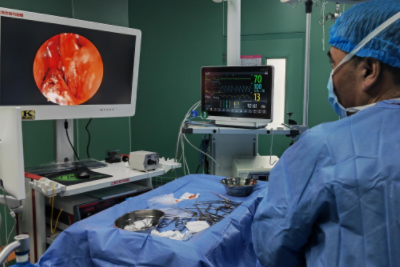
Nasal polyps originating from the middle turbinate or middle meatus, unilateral or bilateral, or posterior nasal polyps. Those that have largely or completely blocked the nasal cavity, affecting nasal physiological function, should be treated surgically first.
Surgical Contraindications:
Cardiocerebrovascular diseases or other serious systemic diseases, such as asthma attacks, hemorrhagic diseases, or acute inflammatory phases.
Postoperative Management of Nasal Endoscopy
Early Postoperative Manifestations:
On the day of surgery, there may be slight nasal bleeding, headache, and periorbital pain. Mouth breathing may be necessary due to nasal packing. These symptoms will improve after the nasal packing is removed. Nasal packing is usually removed 24-48 hours after surgery. Early postoperative mucosal swelling and exudation are also expected. Two days after nasal packing removal, the bleeding from the surgical wound will coagulate and harden within the nasal cavity, forming a black scab.
- Recommended news
- 【General Surgery Laparoscopy】Cholecystectomy
- Surgery Steps of Hysteroscopy for Intrauterine Adhesion
- [General Surgery Laparoscopy] 4K ultra-high definition laparoscopic deroofing and decompression of renal cysts
- [Ureteroscopy in Urology] Laser lithotripsy for ureteral stones
- [Laparoscopic Urology] Laparoscopic Radical Right Nephrectomy