[Orthopedic Arthroscopy] Wrist Arthroscopy
Release time: 23 Dec 2025 Author:Shrek
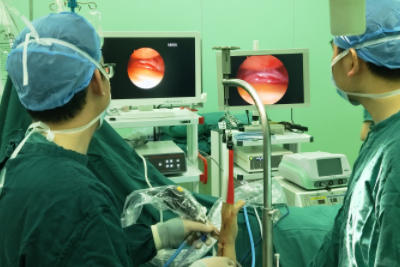
Arthroscopic surgery involves inserting a lenticule-equipped metal tube with illumination through a small incision into the joint cavity. The internal structure of the joint cavity is magnified on a monitor,
allowing observation of lesions and their locations. Simultaneously, a comprehensive examination and cleaning of the affected area is performed under video monitoring. Arthroscopic surgery is a minimally
invasive procedure with both diagnostic and therapeutic functions.
Preoperative Preparation
1. Understand the patient's psychological reaction, provide enhanced nursing care, and help the patient understand the surgical procedure and its significance to build confidence and cooperation.
2. Obtain a detailed medical history, noting any history of drug allergies.
3. Discontinue anticoagulants preoperatively.
4. Keep the skin of the surgical joint clean, avoiding any abrasions, burns, cuts, scratches, infections, or other injuries to the surgical area.
5. Perform isometric contraction exercises of the quadriceps femoris muscle one day before surgery.
6. Administer prophylactic antibiotics 0.5–2 hours before surgery.
Surgical Introduction
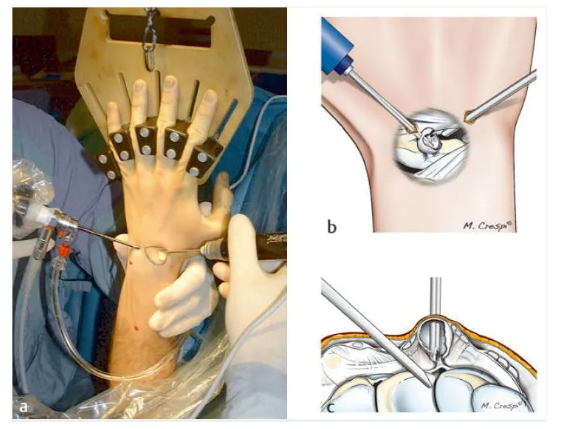
Wrist joint surgery requires the use of a "Chinese finger cot" or traction board to widen the joint space, facilitating the entry of the arthroscopy lens and surgical instruments into the joint cavity.
The arthroscopy lens and instruments are very miniature to fit the narrow joint space; the lens diameter is approximately 2mm.
In most cases, the arthroscopy lens enters the joint cavity from the dorsal side. The dorsal side of the wrist joint contains numerous tendons, divided into six groups based on their anatomical location.
The surgical approach is established between these tendon groups; for example, the approach between tendons group 3 and 4 is called the 3-4 approach, which is the most commonly used channel for
the arthroscopy lens.
The arthroscopy lens and surgical instruments are then inserted into the joint cavity to examine and diagnose the entire joint, and to perform relevant treatments.
In its early stages, the arthroscopy lens was only used for observation. More than a decade later, it was first applied to disease diagnosis, and at that time, it was not yet used for complex treatments. Today,
wrist arthroscopy can diagnose and treat a wide range of wrist conditions, such as TFCC injuries, cartilage damage, ligament injuries, ganglion cysts, scaphoid fractures, nonunion fractures, and as an adjunct
treatment for distal radius fractures. Some procedures require small incisions to facilitate the operation.
"This type of surgery is minimally invasive, has a fast recovery time, and leaves minimal scarring. Furthermore, the medical team will tailor a treatment plan to each patient's specific condition to ensure
optimal surgical results."
7. Postoperative Care
1. Observe wound bleeding and drainage, limb swelling, and pain. Check the dorsalis pedis artery pulse. Prevent excessively tight bandages that could impair blood circulation. Apply ice to the affected
area to check for frostbite.
2. Elevate the affected limb postoperatively to reduce swelling and keep the joint warm.
3. Perform isometric quadriceps contractions on the first postoperative day to promote blood circulation and reduce swelling.
4. Continue functional exercises after discharge until the joint's range of motion is normal, pain disappears, and walking is normal.
5. If redness, swelling, pain, or oozing occurs at the incision site, seek medical attention immediately.

After postoperative external fixation with a short arm brace and regular outpatient follow-up, total arthroscopic TFCC repair has significant advantages in terms of minimal trauma and rapid recovery. Especially
for women concerned about aesthetics, it generally leaves no significant scarring on the wrist. Furthermore, the TFCC technique allows doctors to perform a comprehensive examination of the wrist joint and
address any potential concurrent injuries. Its clinical application is becoming increasingly widespread and is welcomed by many patients.
- Recommended news
- 【General Surgery Laparoscopy】Cholecystectomy
- Surgery Steps of Hysteroscopy for Intrauterine Adhesion
- [Urology Cystoscopy Section] Cystoscopic Laser Lithotripsy
- [Laryngoscopy in Otolaryngology] Tonsillectomy
- [Otolaryngology Otoscopic Section] Excision of Cholesteatoma in the External Auditory Canal