[Orthopedic Arthroscopy] Gouty Arthritis
Release time: 09 Dec 2025 Author:Shrek
With the improvement of people's living standards and the changing dietary habits, the number of gout patients is gradually increasing. Gout is directly related to hyperuricemia and can lead to kidney disease. In severe cases, it can cause joint destruction and kidney dysfunction. It is often accompanied by hyperlipidemia, hypertension, diabetes, arteriosclerosis, and coronary heart disease. Therefore, the prevention and treatment of gout is urgent.
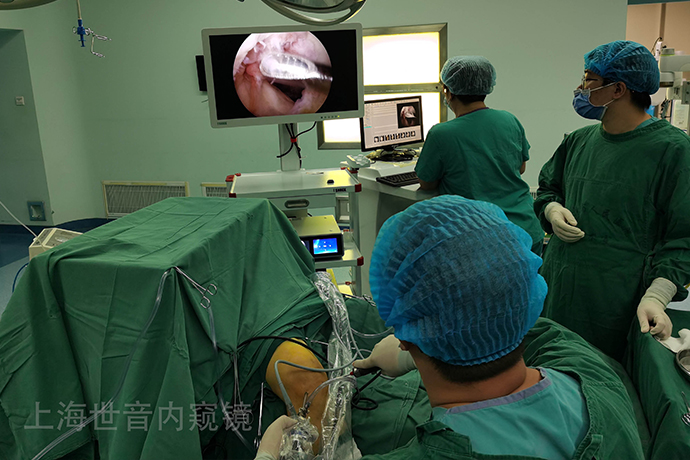
In fact, joint pain does not necessarily mean arthritis. Arthritis is inflammation of the joint and surrounding tissues. This inflammation can be caused by bacteria (requiring antibiotics) or by non-bacterial infection (requiring nonsteroidal anti-inflammatory drugs). It is accompanied by joint swelling, pain, and dysfunction. It is a general term for a group of diseases. Different types of arthritis have different pathogenesis and treatment plans. Only by understanding the exact cause can correct, effective, and standardized treatment be obtained.
Metabolic mechanism: Accelerated purine synthesis leads to excessive uric acid formation and deposition in articular cartilage/bursae/subcutaneous soft tissues.
Pathological Mechanism: Synovial thickening, pannus and granulation tissue formation erode and destroy cartilage and subchondral bone, leading to bone destruction and reactive hyperplasia and sclerosis.
Clinical Characteristics: Ages 30-50, male:female ratio 5:1.
Clinical Staging: Slow disease progression, recurrent attacks, progressive worsening: asymptomatic hyperuricemia stage, acute gouty arthritis stage, intercritical gout attack stage, chronic stage.
Imaging Findings:
• Tophi: Morphology and number correlate with disease progression. Mixed signal intensity, slightly low signal on T1WI (degree of calcification), slightly high signal on T2WI (degree of hydration and fibrosis), enhancement on contrast-enhanced scans (granulomas).
• Soft Tissue Manifestations: Widening of joint space (synovial thickening, joint effusion), swelling of surrounding soft tissues.
• Bone Abnormalities Localized/marginal/asymmetric punched-out lesions, wavy/arc-shaped/honeycomb-like defects, surrounded by sclerotic borders
(Anterior cruciate ligament injury, increased T1 signal; nodular gouty tophi in the suprapatellar bursa/infrapatellar fat pad/cruciate ligament area/anterior patellar soft tissue, surrounded by a capsule; patellar/tibial marginal bone destruction with sclerotic borders)
(T2WI, punctate low signal in the suprapatellar bursa; small nodular slightly high signal in the infrapatellar fat pad; STIR, punctate low signal in the joint cavity adjacent to the suprapatellar bursa, bone marrow edema; wavy synovial swelling) (Thickened, sclerotic bone, gouty tophi)
(Arthroscopy, gouty crystals: SE staining of synovial pathological sections, synovial surface covered with gouty crystals and neutrophils: granulomas in the synovial interstitium)
Differential Diagnosis:
1. Rheumatoid Arthritis
2. Osteoarthritis: In elderly patients, degeneration/destruction of knee cartilage and regeneration of bone at the joint margins/subchondral bone; pannus formation is caused by chronic stimulation from bone hyperplasia, less severe, relatively poorly blood-supplied, and is a fibrous pannus; bone destruction is more localized and related to physical stress.
3. Synovial sarcoma: A soft tissue mass around the joint, involving both bone and soft tissue, with indistinct borders, significant and heterogeneous enhancement on contrast-enhanced CT scans; bone shows erosive destruction and absorption.
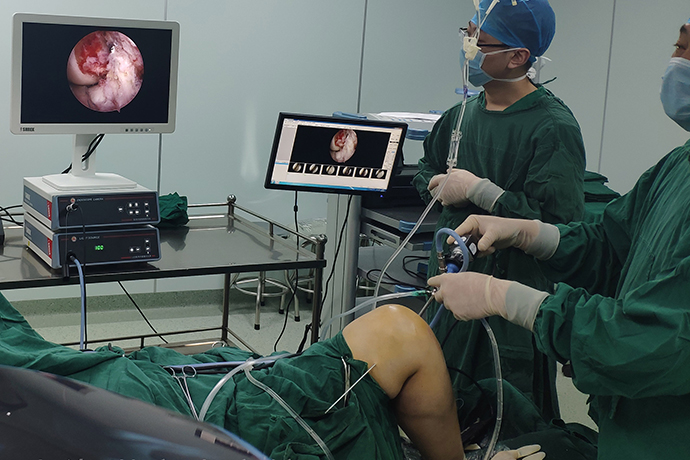
Arthroscopy reveals numerous tophi deposited on the cartilage surface and synovial tissue; after the tophi are largely removed during surgery, a joint irrigation and drainage tube is left in place, and normal saline is continuously infused for irrigation. After the patient regained consciousness from anesthesia, the pain in both knees significantly improved.
Arthroscopy not only aids in early diagnosis but also allows for joint debridement, removing urate crystals deposited on the cartilage and synovial surfaces. Furthermore, copious saline flushing removes urate crystal deposits from the joint cavity, reducing intra-articular inflammation and delaying the onset of osteoarthritis.
The reasons are as follows:
① Joint debridement and copious saline flushing rapidly reduce the urate content in the joint cavity, thereby alleviating the acute inflammatory response caused by high concentrations of urate crystals irritating the joint structures;
② It removes a large amount of inflammatory mediators from the synovial fluid;
③ Removal of congested, hyperplastic, and urate crystal-deposited synovium reduces the production and exudation of inflammatory substances;
④ Arthroscopic removal of tophi and shaping of damaged cartilage areas restores cartilage smoothness and reduces mechanical wear.
In conclusion, to reduce uric acid levels in the body, prevent further damage to joints and soft tissues, and improve joint function, arthroscopic surgery is a relatively effective method, provided that basic medical treatment is adhered to. Arthroscopic surgery not only allows for early diagnosis and treatment of gouty arthritis but can also slow down or even reverse its progression.
Furthermore, it offers advantages such as minimal invasiveness, rapid recovery, and fewer complications. Post-operative pain is quickly relieved, shortening the treatment course and hospitalization time.
However, if gout recurs frequently, and the knee gouty arthritis is prolonged and poorly controlled, it can lead to severe damage to the articular cartilage, eventually severely impairing joint function and significantly impacting daily life.
In such cases, further surgical treatment, such as total knee replacement, is necessary. The surgery removes the damaged cartilage and replaces the severely damaged knee joint with an artificial prosthesis, restoring the patient's knee function.
- Recommended news
- 【General Surgery Laparoscopy】Cholecystectomy
- Surgery Steps of Hysteroscopy for Intrauterine Adhesion
- [Urology Cystoscopy Section] Cystoscopic Laser Lithotripsy
- [Laryngoscopy in Otolaryngology] Tonsillectomy
- [Otolaryngology Otoscopic Section] Excision of Cholesteatoma in the External Auditory Canal