[Otorhinolaryngology Laryngoscopy] Vocal Cord Summary
Release time: 02 Sep 2025 Author:Shrek
Sound is essential for human communication. Vocal cords are the main structure of human voice. Once they become ill, they will lead to a series of voice problems, such as hoarseness, labored pronunciation, change in vocal range, reduced volume, dry throat, foreign body sensation in the throat, frequent throat clearing, itchy throat and cough, etc. Among them, hoarseness is the most common. According to statistics, 33% of people have hoarseness at least once in their lives.
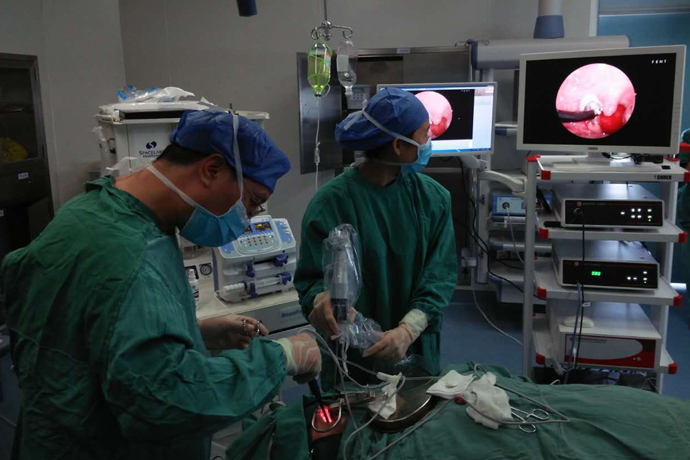
The pathological changes of vocal cord nodules are mainly in the epithelial layer of the vocal cords. Vocal cord polyps and nodules can cause incomplete closure of the vocal cords during pronunciation, resulting in hoarseness and fatigue in pronunciation due to increased vocal cord weight.
The initial nodules are soft and red, covered with normal squamous epithelium, with an edematous matrix, vascular proliferation, and vascular dilation. The mid-stage nodules are more solid, with fibrosis and hyaline degeneration. In the late stage, the nodules are pale, the epithelium is thickened and keratinized, and the spinous cell layer is also thickened and incompletely keratinized.
Vocal cord nodule surgery is a common operation in the Department of Otolaryngology. When conservative treatment is not effective, surgical treatment can be considered. Vocal cord nodule surgery is a minimally invasive surgery. After general anesthesia, the range of the lesion can be enlarged under an endoscope, and then instruments can be used to remove the raised nodule and repair the adjacent mucosa flatly, thereby returning it to normal condition.
The area opposite to the surgery will be swollen after surgery, so the patient needs to keep silent for a period of time to avoid stretching the vocal cords and affecting the wound surface. Patients can usually return to a more normal state about 2 weeks after surgery, but surgery cannot solve all problems. Patients should change their vocalization and speaking habits, otherwise the vocal cord nodules may recur after surgery.
Self-test whether your vocal cords are injured:
If you answer "yes" to any of the following questions, you may have a voice problem:
Is your voice hoarse?
Are your high notes more restricted when you sing than before?
Does your voice suddenly become louder?
Does your throat often feel dry, painful or tight?
Does speaking feel laborious?
Do you find yourself clearing your throat repeatedly?
Teachers, salesmen, actors, singers, doctors, lawyers and other professional voice users are at high risk of vocal cord nodules.
According to statistics, teachers are two to three times more likely to suffer from voice disorders than the general population. Using your voice for a long time may lead to abuse and misuse of your voice. Other predisposing factors include pharyngitis, chronic cough, upper respiratory tract infection, gastroesophageal reflux, laryngeal reflux, endocrine disorders, vocal cord dehydration, anxiety, etc.
Most voice problems can be reversed by treating the underlying cause or a series of behavioral therapies and surgery.
Daily voice protection: avoid six "vocal cord assassins"
Taboo: Yelling, high pitched music in KTV, and screaming in escape rooms
The vocal cords collide excessively and are thus "overloaded", causing vocal cord damage.
Avoid: Smoking, spicy hot pot, ice drinks
Smoke, spicy food, and cold drinks can irritate mucous membranes and cause throat discomfort.
Avoid: Excessive coffee, alcohol, tea
When your voice is uncomfortable, coffee, alcohol, and tea will aggravate the dehydration of your vocal cords, dry your throat, and aggravate the damage.
Don’t use your voice for a long time
Using your voice for a long time keeps your vocal cords in a state of vibration and collision, which puts too much pressure on your voice and leaves you with no chance to rest and recover, aggravating the injury.
Don’t: Clear your throat too much
When our throats are uncomfortable or our voices are hoarse, we subconsciously think of clearing our throats to help our voices recover, but in fact this method is like scraping glass with a knife, which will aggravate the damage to our vocal cords.
Dislike: Whispering
Normally, you may think that speaking like this relaxes your voice, but this will make your voice more tired and may lead to voice tension.
In addition to avoiding the above behaviors, we also need to take more care of our throats, for example: 8 cups of warm water a day, which will make our vocal cords more lubricated; take a 5-minute break every 30 minutes of speaking to give the throat a buffer and rest time to avoid excessive use of the throat.
- Recommended news
- 【General Surgery Laparoscopy】Cholecystectomy
- Surgery Steps of Hysteroscopy for Intrauterine Adhesion
- [Orthopedic UBE Section] Advanced Guide to Unilateral Dual-Channel Endoscopy (UBE): 10 Key Details for Overcoming the Learning Curve
- [Orthopedic UBE Section] Four Years of Evolution of UBE Technology: From Lumbar Fusion to the "Forbidden Zone" of Thoracic and Cervical Spine, and the Unignorable "Hydraulic Pressure Crisis"
- [Gynecological Hysteroscopy] Techniques for Preventing and Treating Complications of Hysteroscopic Surgery