[Otorhinolaryngology Otolaryngoscopy] How to cooperate to complete endoscopy
Release time: 09 Sep 2025 Author:Shrek
Many otolaryngology patients find that doctors often use some instruments to examine themselves in the corresponding parts, and sometimes perform further endoscopic examinations.
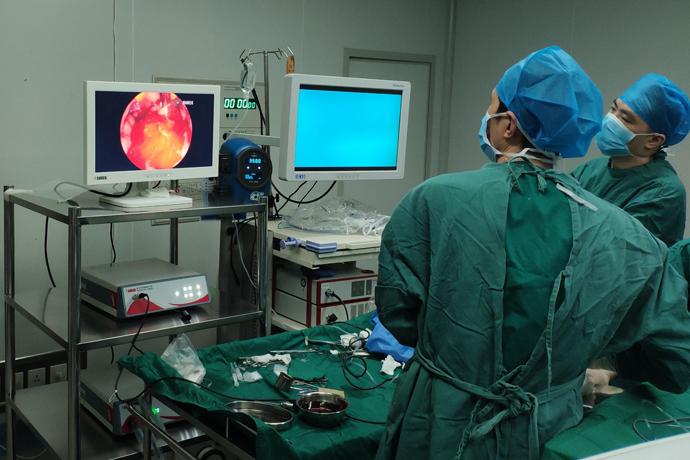
In fact, this is not what is called over-medication. Since the ear, nose and throat are mostly porous structures with complex physiological structures, it may not be possible to see all parts clearly or completely using traditional specialist instruments, and there may be missed or misdiagnosed cases.
Endoscopy can be performed through an optical fiber system. The light is refracted at various angles by the endoscope, and the various parts of the ear, nose and throat are clearly magnified on the display screen, which is convenient for observation and is helpful for doctors to accurately diagnose and treat diseases.
What are the advantages of ENT endoscopy?
1. Using high-brightness LED light source and light guide fiber lighting, the brightness is strong and the observation of the scene is clear, changing the external method used by traditional rhinologists. It also has no radiation and does not contain toxic and harmful substances (such as mercury), which avoids damage to the body caused by mercury leakage from broken fluorescent lamp tubes.
2. Large viewing angle. Using endoscopes at different angles, doctors can make comprehensive observations of the nasal cavity, pharynx, and ears.
3. High resolution, no focal length limit, both distant and near objects are very clear.
4. The endoscope has a magnifying effect. Moving the endoscope from 3 cm to 1 cm away from the observed scene can magnify the observed object dozens of times.
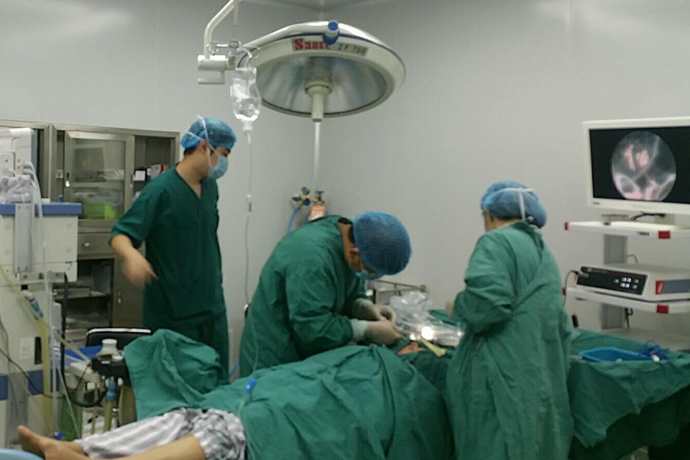
5. The nasal endoscope can be connected to the camera system so that the surgical method, surgical cavity and other conditions can be completely displayed on the monitor, which is conducive to observation by the surgical instructor, operator and assistant.
6. One-click capture, humanized design. You can take pictures as you press buttons during operation.
When does an endoscopy of the ear, nose and throat need to be performed?
Such as: examination of earache, ear discharge, acute and chronic otitis media caused by ear fullness, secretory otitis media, tympanic membrane perforation, foreign body in the external auditory canal and other diseases.
Such as: nasal obstruction, purulent discharge, runny nose, snoring, mouth breathing, etc. caused by diseases such as acute and chronic sinusitis, nasal polyps, adenoid hypertrophy, and epistaxis.
Such as: examination of hoarseness, acute and chronic pharyngitis caused by laryngeal stridor, vocal cord nodules, vocal cord polyps, laryngomalacia and other diseases.
Will the inspection process be painful?
Generally speaking, from 80- and 90-year-olds to 7- and 8-year-old children, except for some more sensitive patients, the "pain" of endoscopy can be tolerated by most people.
And most of the time, this discomfort is not so much "pain", but more appropriately a "soreness", or accompanied by a little "itching" feeling.
Furthermore, endoscopy can usually be completed within 3-5 minutes and is not a long and painful examination.
How to cooperate to complete endoscopy?
During an otoscopy, the doctor will tell you to take an appropriate supine position. The doctor will enter the external auditory canal and observe the ear canal and tympanic membrane. If there is cerumen, secretions, or foreign bodies in your ear canal, the doctor will use corresponding instruments to clean it, such as earwax hooks, ear forceps, and suction tubes. You need to keep your position still to avoid shaking your head violently, which may damage the ear canal or even the tympanic membrane.
Before the nasal endoscopy, the doctor will help you use Furuma nasal drops to converge the nasal mucosa and tetracaine hydrochloride glue to anesthetize the nasal mucosa. The examination will take about 5 minutes after the medicine takes effect.
Sit upright, tilt your head slightly, and look through the mirror to observe the condition of the bilateral nasal mucosa, nasal septum, turbinates, nasal passages, olfactory fissures, and nasopharynx. You will still feel soreness in the nasal cavity, and you need to keep your position still to avoid violent shaking that may damage the nasal mucosa. After the examination, you can not eat or drink until the anesthesia in the throat subsides (about 1 hour).
Before laryngeal endoscopy, the doctor will help you use tetracaine hydrochloride jelly or lidocaine aerosol to superficially anesthetize the throat mucosa to reduce the gag reflex (nausea and vomiting) during the examination. Each anesthesia interval is 3-5 minutes, and a total of 2-3 times are required.
After the anesthesia takes effect, perform an examination. Take the upright sitting position and look through the mirror to observe the bilateral soft palate, uvula, bilateral tonsils, posterior pharyngeal wall, base of tongue, epiglottis, bipyriform fossa, bilateral ventricular cords, vocal cords, etc. When observing the vocal cords, you need to cooperate with the "E" sound to better expose the glottis.
After the examination, you can not eat or drink until the anesthesia in the throat subsides (about 1 hour).
Otolaryngology clinic diagnosis and treatment scope
Allergic rhinitis, sinusitis, pharyngitis, otitis media, snoring in children and adults, hoarseness, vertigo, tinnitus, hearing loss, head and neck tumors, etc. Endoscopy and imaging examinations of the ear, nose, and throat, ear function, and audiology examinations will be carried out soon.
- Recommended news
- 【General Surgery Laparoscopy】Cholecystectomy
- Surgery Steps of Hysteroscopy for Intrauterine Adhesion
- [General Surgery Laparoscopy] 4K ultra-high definition laparoscopic deroofing and decompression of renal cysts
- [Ureteroscopy in Urology] Laser lithotripsy for ureteral stones
- [Laparoscopic Urology] Laparoscopic Radical Right Nephrectomy