[General Surgery Laparoscopy] Radical Cholecystectomy for T3 Gallbladder Cancer
Release time: 21 Oct 2025 Author:Shrek
Laparoscopic radical cholecystectomy for T3 gallbladder cancer is a complex procedure requiring the surgeon to possess a high level of expertise and extensive clinical experience. The extent of liver resection during laparoscopic radical cholecystectomy is often determined based on the tumor's TNM stage and the extent of liver invasion. With advances in technology and concepts, procedures previously performed openly can now be safely performed laparoscopically.In the process of liver lobectomy, in order to achieve both radical cure of the tumor and preservation of as much functional liver parenchyma as possible, Ho et al. first proposed the concept of laparoscopic limited anatomical hepatectomy (LLAH) in 2013. The core concept is to still retain anatomical liver resection. Compared with traditional anatomical liver resection, there is no significant difference in the long-term oncological effect after LLAH. Because LLAH also retains more functional liver parenchyma, it effectively reduces the incidence of postoperative liver failure.
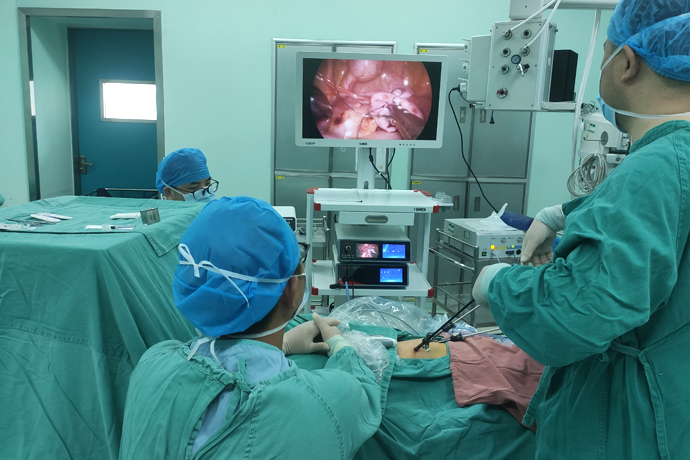
Preoperative Preparation
Patient Position: The patient lies supine on the operating table with legs slightly apart to allow access to the abdomen. General Anesthesia:
Surgical method
Anesthesia was performed with endotracheal intubation and intravenous general anesthesia, with the patient positioned supine on the operating table. A 1 cm skin incision was made below the umbilicus, and a 10 mm trocar was inserted to establish pneumoperitoneum. The pneumoperitoneum pressure was maintained at 10-14 mmHg (1 mmHg = 0.133 kPa). A 30° laparoscope was inserted to explore the liver and its surroundings. Under laparoscopic observation, the tumor stage was initially confirmed, and the presence of peritoneal, hepatic, and other distant metastases was investigated. A routine para-aortic lymph node pathological examination (16 groups) was performed. If no positive results were found, radical surgery for stage T3 gallbladder cancer was performed.
The location and extent of the liver resection are assessed, and the remaining trocars are placed using the conventional five-port technique. The gallbladder triangle is dissected, and the cystic artery and cystic duct are ligated and severed. The hepatoduodenal ligament is dissected and a tourniquet is placed (to prevent excessive intraoperative bleeding). The hepatoduodenal ligament is skeletonized, and lymph nodes are dissected to the next station of metastatic lymph nodes. The posterior pancreatic head and suprapancreaticoduodenal lymph nodes are dissected as appropriate. Following the principle of en bloc resection, the first hepatic portal vein is fully dissected, and the right hepatic artery, right branch of the portal vein, and right hepatic duct are ligated. The peripaptic ligaments are divided, and a conventional anatomical right hemihepatectomy or right trisegmentectomy is performed based on the ischemic line on the liver surface and the anatomical landmarks of the Couinaud segment. The right hepatic vein is divided and ligated intraparenchymalally. The third hepatic portal vein is treated extrahepatically with an ultrasonic scalpel. When performing a right trisegmentectomy, the left hepatic vein should be avoided. For limited anatomical liver resection, perihilar dissection is performed. The Glisson system sheath of the right hepatic pedicle is incised, and the right hepatic artery, right portal vein, and right hepatic duct are isolated. These are then retracted with a fine thread without being cut. Based on the Couinaud segmental landmarks, the tumor-bearing portal vein basin is resected. During the liver parenchyma dissection, the involved vessels are ligated and divided with a Hem-o-Lok clip. The liver section is carefully inspected and treated for bleeding and bile leakage.
Laparoscope Insertion: A laparoscope, a long, thin, tubular instrument with a camera at the end, is inserted through one of the port incisions. This provides a magnified, high-definition view of the abdominal cavity.
Structure Identification: The surgeon carefully identifies and evaluates the gallbladder, adjacent liver tissue, lymph nodes, and any suspected areas of tumor involvement.
Dissection of Calot's Triangle: The cystic duct and cystic artery, which form Calot's triangle, are dissected and ligated. This allows for safe separation of the gallbladder from the liver.
Discussion
LLAH provides a new approach for minimally invasive and precise radical resection of T3 gallbladder cancer.
For stage T3 gallbladder cancer diagnosed preoperatively by imaging and serological tests, guidelines from relevant professional groups recommend laparotomy. Because stage T3 and above gallbladder cancer is prone to distant metastases, such as those in the liver and peritoneum, making R0 radical resection difficult, this type of laparotomy is essentially an exploratory procedure. Whether the tumor can be cured is uncertain, and it inevitably causes significant trauma to the patient. Experts recommend performing less invasive laparoscopic exploration instead of laparotomy. If laparoscopic exploration of gallbladder cancer reveals no distant metastases, the current maturity and widespread clinical application of laparoscopic precise liver resection creates the necessary conditions for laparoscopic radical resection of stage T3 gallbladder cancer. Previously, radical resection of stage T3 gallbladder cancer often required anatomical resection of the right hemiliver or the right three lobes of the liver to achieve R0 resection of the tumor. However, the remaining liver volume was small, and the incidence of complications such as postoperative liver dysfunction was high.With the introduction of the concept of the anatomical boundary of the tumor-bearing portal vein branch basin centered on the tumor lesion during radical hepatocellular carcinoma resection and the application of intraperitoneal ultrasound technology, anatomical liver resection has become easier to perform. To preserve more functional liver tissue, LLAH using tumor-bearing intersegmental lesions has become widely used clinically. The development of LLAH provides a new approach for more minimally invasive and precise radical resection of T3 gallbladder cancer. Limited anatomical liver resection was first used for liver resection of colorectal liver metastases. Inspired by this approach, our team has applied LLAH to radical resection of T3 gallbladder cancer. This study showed that patients in the LLAH group had lower intraoperative blood loss, postoperative length of stay, hospitalization costs, postoperative complications, and the incidence of hepatic dysfunction than those in the traditional group (all P < 0.05).
The setting of the tumor-bearing liver parenchyma separation plane in radical resection of T3 cholecystectomy is the most critical technical link in LLAH
During radical resection for T3 gallbladder cancer, limited anatomical liver resection is performed. The tumor and surrounding liver segments within the portal vein branches of the tumor-bearing subsegment are resected, adhering to the principle of parenchymal preservation to avoid impairing liver function. Therefore, accurate preoperative imaging assessment and setting of the resection plane are key steps in the application of LLAH for radical resection of T3 gallbladder cancer. Before surgery, thin-slice enhanced CT and MRI three-dimensional visualization techniques are used to clearly visualize the gallbladder, liver infiltration, and the involved vascular drainage areas, allowing for the optimal surgical plan. We block the liver pedicle on the affected side according to the anatomical landmarks on the liver surface and then resect the liver parenchyma along a plane defined by the ischemic line on the liver surface after pedicle blockage, the course of the hepatic veins or interbranchial branches of the tumor-bearing segment within the liver parenchyma, and the posterior inferior vena cava.
However, the classic anatomical Couinaud intersegmental planes sometimes do not completely coincide with these planes, which contributed to one R1 resection in each group. Compared with traditional anatomical liver resection, limited anatomical liver resection requires more rigorous observation of the preserved liver parenchyma sections to assess for ischemia, congestion, and bile leakage, thereby preventing postoperative liver dysfunction. In recent years, indocyanine green fluorescence or glypican 3 (GPC3) navigation has been increasingly used in liver surgery. This has enabled more reliable identification and confirmation of deep intersegmental planes and resection margins within the liver parenchyma, allowing for accurate and comprehensive visualization of the surgical margins of tumor-bearing liver tissue within the portal vein branch basin, ensuring proper blood supply and drainage of the remaining liver after resection. This approach is expected to be applicable in anatomical liver resection for radical resection of T3 gallbladder cancer.
Compared with traditional anatomical liver resection, limited anatomical liver resection in laparoscopic radical resection for T3 gallbladder cancer involves more detailed and complex anatomical sections, making exposure more difficult and the procedure more challenging, thus increasing operative time. Furthermore, laparoscopic radical resection for T3 gallbladder cancer also presents the problem of peritoneal and incisional metastasis, which occurred in both the traditional and LLAH groups in this study. Therefore, strict intraoperative abscess-free technique, avoiding gallbladder rupture, controlling intraperitoneal pressure and the chimney effect caused by Trocar leaks, and placing the resected specimen in a dedicated bag for safe removal are crucial. The advantage of LLAH in this procedure lies in achieving a complete R0 resection while preserving functional liver structure and volume to the greatest extent possible. This results in a low incidence of postoperative complications and hepatic dysfunction, rapid patient recovery, and shortened hospital stays. In recent years, achieving maximum organ protection and optimal recovery with minimal invasiveness has become the goal of minimally invasive and precision biliary surgery. The application of LLAH in radical resection for gallbladder cancer embodies this philosophy.
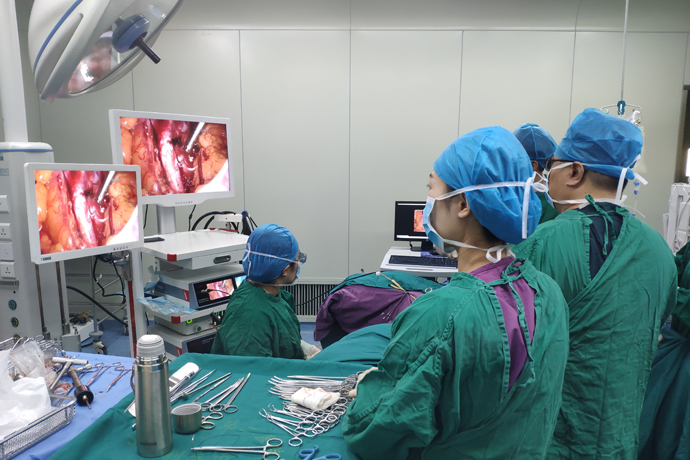
- Recommended news
- 【General Surgery Laparoscopy】Cholecystectomy
- Surgery Steps of Hysteroscopy for Intrauterine Adhesion
- [General Surgery Laparoscopy] 4K ultra-high definition laparoscopic deroofing and decompression of renal cysts
- [Ureteroscopy in Urology] Laser lithotripsy for ureteral stones
- [Laparoscopic Urology] Laparoscopic Radical Right Nephrectomy