[Otolaryngology Otoscopic Section] Excision of Cholesteatoma in the External Auditory Canal
Release time: 11 Aug 2026 Author:Shrek
What is an external auditory canal cholesteatoma?
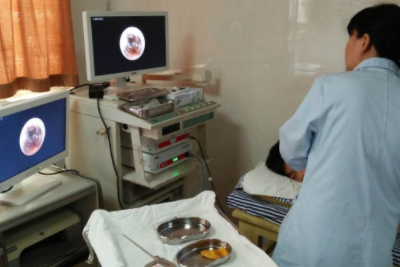
The area between the tympanic membrane and the opening of the ear canal is called the external auditory canal.
A cholesteatoma is not the kind of tumor we usually imagine.
It's an expansive growth.
What it sheds is actually epithelium.
It has the biological characteristics of oncology.
But unlike lung cancer or pancreatic cancer,
it doesn't grow into a large, malignant tumor.
It's not a solid tumor; it's more like a cyst.
It's an accumulation of epithelial tissue.
Although it's not a tumor, it shouldn't be underestimated. It can also cause many complications.
It can grow and damage surrounding structures.
In severe cases, it may enter the mastoid process behind the ear.
Pressing the temporal nerve can cause facial paralysis.
Further down, it can cause infection throughout the neck.
It can even cause intracranial infection leading to death.
When it looks like a boil from the outside, the inflammation and infection have actually caused granulation tissue to proliferate around the ear canal, forming a blockage. In severe cases, the ear canal opening is a large granulation tissue, and nothing can be seen inside. Then pus flows out from inside. The formation of cholesteatoma is likely due to childhood trauma, or some remnants from the embryonic period, or frequent ear picking causing inflammation. Inflammation of the external auditory canal itself alters the self-cleaning function and morphology of the ear canal, causing granulation tissue to proliferate and further hindering the drainage of these substances.
Was the cholesteatoma in the external auditory canal removed by picking?
Actually, you can get cholesteatoma of the external auditory canal whether you pick at your ears or not. The underlying reason is inflammation. While frequently picking your ears may seem like a way to keep them clean, it easily damages the skin of the external auditory canal. Itching often indicates eczema or chronic otitis externa. Repeated inflammation and repair of the ear canal skin disrupts metabolism, preventing the expulsion of shed skin cells. Combined with inflammation, this can easily lead to cholesteatoma. Although Xiao Feng didn't pick his ears, he likely had oily earwax. If this type of earwax isn't cleaned regularly, the oil and skin cells accumulate, creating a breeding ground for bacteria and causing non-infectious inflammation. Repeated inflammation also disrupts ear canal metabolism, preventing the expulsion of skin cells and eventually leading to cholesteatoma. Dry earwax doesn't need special cleaning; it will drain on its own. Oily earwax is harder to expel, but it will gradually move out during daily chewing and talking. However, if you feel a hard object inside, you should see a doctor.
What are the symptoms of cholesteatoma of the external auditory canal? External auditory canal cholesteatoma resection is a surgical treatment to remove abnormal keratinized epithelial deposits (cholesteatomas) within the external auditory canal. It is suitable for patients experiencing pain, infection, hearing loss, or damage to the ear canal structure caused by cholesteatomas. The surgery is performed under anesthesia, and proper postoperative care is essential to reduce the risk of recurrence.
External auditory canal cholesteatomas form very slowly and are asymptomatic in the early stages.
If a mass completely obstructs the external auditory canal, it will cause a feeling of fullness in the ear. Examination at this time will reveal cerumen blockage in the cartilaginous part of the external auditory canal; after removing part of the cerumen, a deep white epithelial mass can be seen. If the cerumen is difficult to remove, the possibility of external auditory canal cholesteatoma should be considered.
Most patients present with severe ear pain and bleeding. Common causes include ear cleaning or secondary infection after water enters the ear. Physical examination will reveal a granulation tissue mass obstructing the cartilaginous part of the external auditory canal; after removing the granulation tissue, a white epithelial mass can be seen.
Because cholesteatomas are known for their bone-destroying properties, their expansive growth within the ear canal can:
Inwardly, they can compress the tympanic membrane and ossicles, leading to tympanic membrane retraction and adhesions, and even destruction of the ossicles, semicircular canals, and cochlea;
Posteriorly, they can destroy the posterior wall of the external auditory canal and enter the mastoid process. If the chorda tympani nerve behind the posterior wall of the external auditory canal is involved, it can manifest as taste disturbance in the anterior two-thirds of the tongue on the same side. Further posterior involvement of the vertical segment of the facial nerve can result in facial paralysis;
Anteriorly, they can destroy the anterior wall of the external auditory canal and affect the temporomandibular joint.
To prevent cholesteatoma of the external auditory canal, the following points should be observed:
1. In daily life, cultivate good hygiene habits, pay attention to personal hygiene, trim nails frequently, and avoid frequent ear picking.
2. Keep the external auditory canal clean, dry, and undamaged. Prevent dirty water from entering the ear. Remove any water from the external auditory canal promptly after swimming or bathing.
3. Understand and learn about the relevant information regarding cholesteatoma of the external auditory canal to cope with emergencies. If you experience any discomfort, consult an otolaryngologist promptly.
4. If you have any ear diseases, seek treatment as early as possible to avoid the condition becoming chronic.
It is important to note that the ear has a self-cleaning mechanism and should not be cleaned too frequently. However, if you experience discomfort due to blockage in the external auditory canal, hearing loss, foul odor from the external auditory canal, discharge from the external auditory canal, or ear pain, you should seek medical attention immediately. If diagnosed with cholesteatoma of the external auditory canal, surgical treatment should be performed as soon as possible.
Next
没有了!
- Recommended news
- 【General Surgery Laparoscopy】Cholecystectomy
- Surgery Steps of Hysteroscopy for Intrauterine Adhesion
- [Otolaryngology Otoscopic Section] Excision of Cholesteatoma in the External Auditory Canal
- [Otolaryngology Nasal Endoscopy] How to Treat Recurrent Rhinitis
- [Orthopedic Arthroscopy] Common Methods of Knee Joint Aspiration